The fastest way to waste time in the gym is training around a myth instead of a plan.
Fitness Classes should feel like the simplest part of your week: you show up, you work, you leave better than you arrived. But in Maplewood, we hear the same hesitations again and again, usually from people who want results but worry they will be the odd one out, fall behind, or get stuck doing endless cardio.
We built our classes specifically to remove those barriers. Our goal is straightforward: coach you through smart, scalable training that improves strength, conditioning, and confidence in how your body moves, without making you feel like you need to “get in shape first.”
This myth-busting guide is here to clear the air, explain what our sessions actually look like, and help you get more out of every 60-minute block you carve out for yourself.
Why myths about Fitness Classes stick around in Maplewood
Maplewood is full of busy adults balancing commutes, kids, and packed calendars, so it makes sense that you want your workouts to count. A myth sticks when you have tried something once, felt lost, and decided the whole category must not be for you.
Another reason myths hang on is that group training looks intimidating from the outside. You might see people moving quickly, hear unfamiliar coaching cues, or assume you will have to keep up at the same pace. In reality, good coaching makes group training more accessible, not less, because you are guided instead of guessing.
We also see a local trend toward smaller, more intentional training environments. People want coaching, community, and functional results, not a random list of machines and a vague plan. That shift is exactly why the following myths deserve retirement.
Myth 1: Group Fitness Classes are only for advanced athletes
This is the most common misconception we hear, and it usually comes from thoughtful people who do not want to get hurt or slow the room down. Here is the truth: beginners often do better in structured Fitness Classes than on their own because you get real-time guidance, clear pacing, and built-in progressions.
We coach you based on your starting point, not somebody else’s highlight reel. If you are new, we focus on basics that pay off fast: posture, bracing, breathing, safe ranges of motion, and simple versions of the movements before we add speed or load.
We also scale intensity without watering down the workout. That means you can train hard at your level while still feeling part of the group. For example, a strength segment might include squats or hinges, but your version might be a goblet squat to a box while someone else front squats. Same pattern, different dose.
What “beginner-friendly” actually means in our room
Beginner-friendly is not code for easy. It means coached, clear, and adaptable.
• We demonstrate movements, then coach you through the details that matter most for safety and results
• We offer options for load, range of motion, and speed so you can train confidently on day one
• We build consistency first, because consistency beats intensity when you are getting started
Myth 2: You will not get personalized attention in a class setting
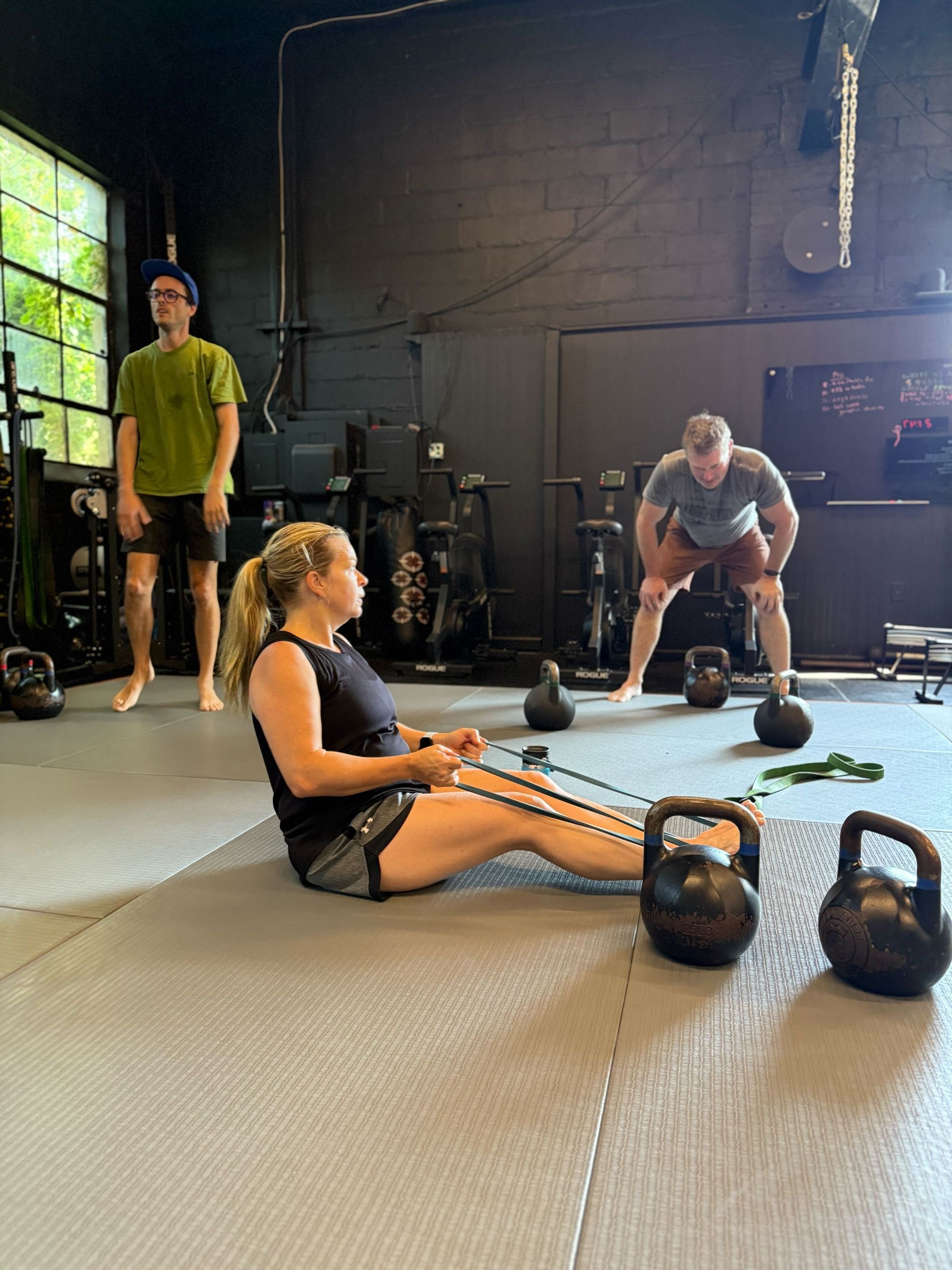
A big room with a big crowd can feel anonymous. That is exactly why we keep our group environment intentionally small, so coaching stays personal and you do not get lost in the shuffle.
Personalization does not require a separate workout plan for every person. It requires a coach who is watching you move, correcting what needs correcting, and choosing the right regression or progression at the right time. In practice, that might look like a quick stance adjustment in your deadlift setup, a reminder to keep your ribs stacked, or a smarter weight choice that keeps form crisp.
You also get something in classes that most people do not get training alone: perspective. When a coach sees you every week, patterns show up. Maybe your left hip always feels tight, or your pushups break down the same way every time. We notice those trends and coach accordingly, which is where better results start to compound.
The small-group coaching difference
During a typical session, personalization shows up in quiet, consistent ways:
• Form checks on compound lifts so you build strength without “cheating” joints into the work
• Individual adjustments for mobility limits, old aches, or stress-heavy weeks when recovery is lower
• Progression tracking, so you are not repeating the same weights and reps forever
Myth 3: Fitness Classes are basically cardio, not real strength training
If your picture of a class is nonstop jumping and light weights, you are not alone. But strength is not a vibe, it is a training outcome. Building strength requires progressive overload, smart exercise selection, and enough quality reps to improve technique and capacity.
Our workouts include compound, functional strength movements because those deliver the biggest return for real life. Squats, deadlifts, presses, carries, kettlebell swings, and similar patterns show up regularly, scaled to your level. You learn to create tension, move with control, and then gradually move more weight or move the same weight better.
We also train power and explosiveness in a safe way. That matters because power is what helps you catch yourself when you trip, move quickly without tweaking something, and feel athletic again, even if you have not felt “athletic” in years.
What our 60-minute class structure looks like
Most sessions follow a clear arc so you know what you are doing and why you are doing it:
1. Mobility warm-up to open range of motion and prepare joints and tissue
2. Strength focus with a primary lift or pattern, coached for form and progression
3. Conditioning work using intervals that build endurance without sloppy movement
4. Recovery and downshift, including breathing and mobility to leave you better than you came in
The bonus of this structure is that it works whether you are chasing performance or just want your body to feel capable again. You get both strength and conditioning, but not at the expense of either.
Myth 4: Fitness Classes in Maplewood NJ do not fit busy adult schedules
We get it. A workout that requires extra planning, long drives, or guesswork about timing usually does not survive a real Maplewood week. The solution is not motivation. It is a system that respects your time.
Our classes are designed to be efficient: you do not wander around deciding what to do next, and you do not waste the first 15 minutes figuring out equipment. You come in, we coach, you work, you leave. That simple rhythm matters when you are squeezing training between meetings, school pickup, or dinner.
Consistency also becomes easier when you are not doing it alone. Community accountability is real, and it is one of the strongest adherence drivers we see. Many adults prefer training with others because it reduces decision fatigue and keeps momentum going, especially when life gets busy.
Practical ways to make training stick
If your schedule is unpredictable, these habits help:
• Pick two or three recurring class times and treat them like appointments
• Start lighter than your ego wants, so soreness does not knock you out for a week
• Track one or two simple metrics, like the weight you used or how your breathing recovered between intervals
This is how Fitness Classes become part of your routine instead of another thing you tried briefly.
Myth 5: You need solo workouts to get results faster
Solo training can work well, but it is not automatically faster, and it is not automatically smarter. The biggest reason people stall is not lack of effort. It is lack of progression, lack of feedback, and lack of consistency.
In our classes, we combine expert coaching with a training flow that pushes both general physical preparedness and day-to-day durability. Hybrid strength and interval formats are especially effective for busy adults because you build strength and conditioning in the same hour, and you are more likely to show up when the session is coached and structured.
The other acceleration factor is quality. If you are training alone and your movement is off, you can repeat that error for months. In class, we correct it in real time. That can be the difference between feeling “stuck” and finally seeing measurable progress.
How to know you are progressing
Results are not just a number on a scale. In a good training cycle, you will usually notice:
• You lift more weight with the same clean form, or the same weight feels easier
• Your conditioning improves, so you recover faster between intervals
• Your daily movement feels better, like stairs, carrying groceries, and long walks
• You feel more confident choosing the right intensity without burning out
If your Fitness Classes are not producing those outcomes, the problem is not group training, it is the plan and coaching behind it. Our job is to make sure the plan works for you.
Take the Next Step
Better results in Maplewood start with clearer expectations: Fitness Classes should be coached, scalable, and built around real strength, not just sweat for sweat’s sake. When you understand what is actually happening in a session and why, you train with more confidence and less second-guessing.
That is exactly how we run things at Soma MVMT. We keep our groups small, our coaching hands-on, and our programming grounded in mobility, compound strength, conditioning, and recovery so you can feel capable in the gym and in the rest of your life.
Develop real movement skills and functional fitness by joining a free fitness class at SOMA MVMT.