Your first class should feel coached, welcoming, and doable, not like a test you forgot to study for.
Starting Fitness Classes for the first time can feel weirdly high-stakes, even when you want it. You might be excited and also quietly wondering if you will be the only beginner in the room, or if you are supposed to already know what a lunge is supposed to look like.
Our approach in Maplewood is simple: you should be able to show up exactly as you are, get clear coaching, and leave feeling like you did something good for your body without getting overwhelmed. If you have been searching for Fitness Classes in Maplewood, NJ and you want a low-pressure way to begin, this guide will help you choose a first class that matches your goals and your comfort level.
We will break down the easiest starting points, what each format feels like, what to wear, and how to build momentum after the first month so you do not end up doing the classic thing where week one is strong and week three disappears.
What makes a class truly beginner-friendly
“Beginner-friendly” is not just about making a workout easier. It is about removing the guesswork. You deserve to know what is happening, why you are doing it, and how to adjust it so it works for your body on that day.
In practice, beginner-friendly Fitness Classes usually have three key ingredients: coaching you can actually hear and use, options for different fitness levels, and a pace that lets you learn without feeling rushed. We keep the focus on movement quality, not performance. You are not here to impress anyone. You are here to build consistency.
A supportive class also respects that beginners are not all the same. Some people are brand new to exercise. Others are returning after a long break, an injury, pregnancy, or a stressful season where workouts fell off. A good first class gives you a starting point and a path forward.
The best first Fitness Classes to try in Maplewood (ranked by “easiest entry”)
If you want the simplest way to start, we recommend choosing based on how much impact and complexity you want on day one. You can always build intensity later. The goal for your first week is to show up, learn the vibe, and move well.
1. Mindful strength intervals with built-in options
This is often the smoothest entry point because you get structure, coaching, and short bursts of work with rest. Intervals also make it easier to scale, since you can adjust load, range of motion, or tempo while still following the plan.
2. Low-impact strength and conditioning
If jumping feels like a hard no right now, low-impact conditioning is a strong choice. You will still elevate your heart rate, but we keep the movement joint-friendly and focused on control.
3. Mobility and movement-focused classes
If stiffness is your biggest barrier, start here. Mobility work improves how everything else feels, including walking, running, lifting, and even sitting at your desk. It is also sneaky-effective for stress relief.
4. Core and posture-focused training (Pilates-inspired fundamentals)
If you want a steady, controlled format that teaches alignment and core engagement, beginner core work is a great first step. It helps you feel more “connected” in your body, which makes every other class easier to learn.
If you are unsure, check the class schedule page and pick the one that sounds most approachable. Your first class does not need to be perfect, it just needs to be the one you will actually attend.
What to expect in our beginner-focused classes
Most beginners want details, not hype. Here is what the experience typically feels like.
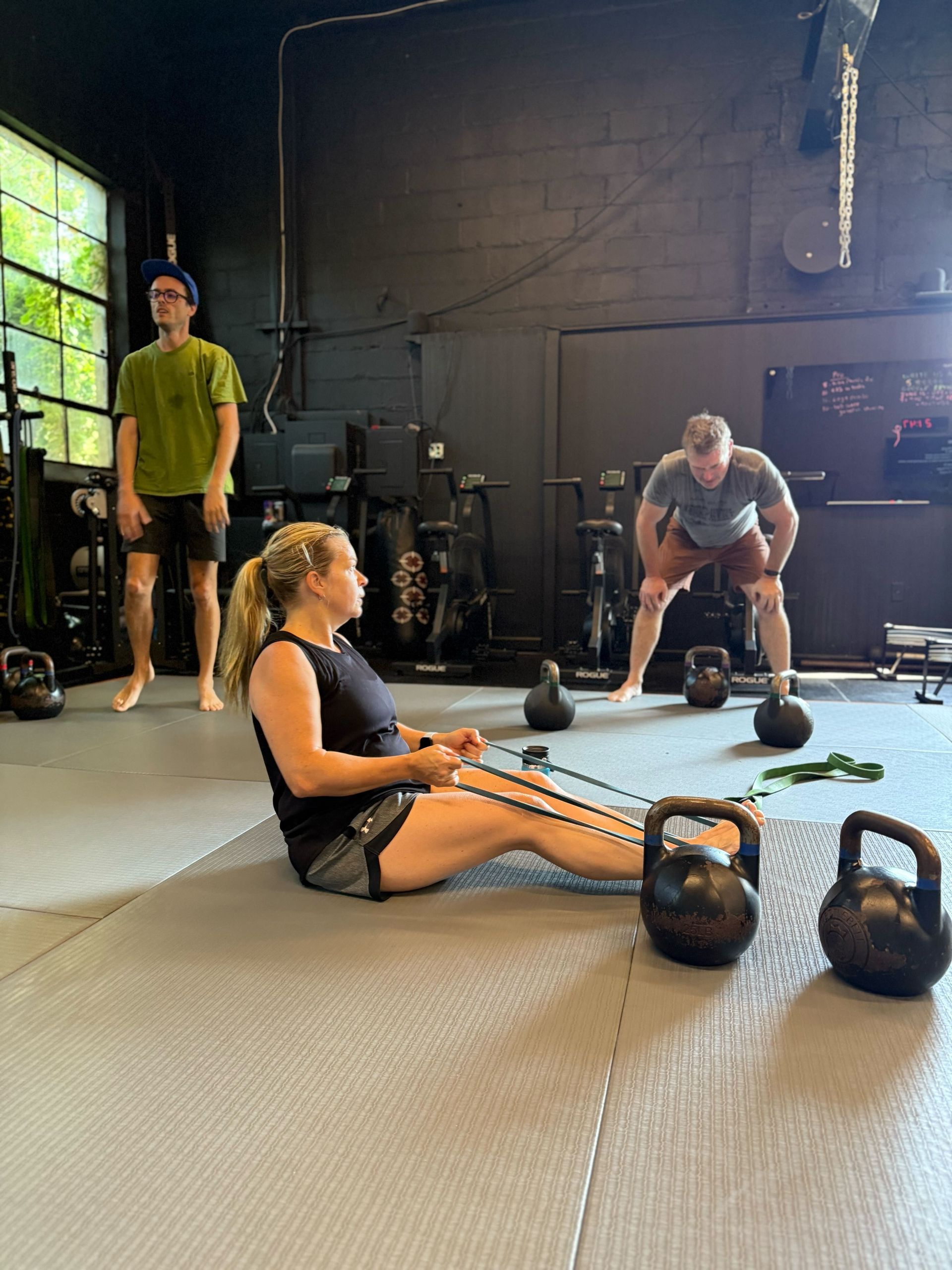
You will get coaching from the moment class starts. We explain the goal of the day, demonstrate movements, and offer cues so you can adjust in real time. If something does not feel right, we help you find a better option, whether that means changing the weight, changing the range of motion, or swapping the movement entirely.
Intensity should feel challenging but manageable. You might breathe hard, you might sweat, and you might feel muscles you forgot existed. But you should not feel lost. We aim for the kind of hard that leaves you proud, not crushed.
We also expect beginners to take pauses. Rest is not a sign you failed. Rest is part of training, especially when you are learning.
How we scale workouts so you can start from anywhere
A beginner-friendly environment is not about everyone doing the same thing. It is about everyone working toward the same purpose with the right level of challenge.
We scale in a few practical ways. We can adjust load by using bodyweight, lighter dumbbells, or bands. We can adjust complexity by choosing a simpler variation that still trains the same pattern. We can also adjust volume and pace, meaning fewer reps, more rest, or slower movement for control.
If you are dealing with an old injury, tight hips, cranky knees, or a tender lower back, tell us before class starts. We will help you choose options that keep you moving safely. You do not need to “push through” pain to earn progress.
Which class is right for you (based on your goal)
Beginners often pick a class based on what sounds cool, then get discouraged when it does not match what their body needs yet. Choosing based on your goal makes it easier to stay consistent.
If you want strength and tone without feeling intimidated
Start with guided strength intervals. You will learn foundational patterns like squats, hinges, presses, rows, and carries. These movements build real-world strength and help you feel more capable quickly.
If you want better posture and a stronger core
Choose a slower, alignment-focused session where we emphasize breathing, ribcage position, pelvic control, and intentional core engagement. This is especially helpful if you sit a lot or feel “loose” in your midsection.
If you want mobility, flexibility, and less stiffness
Pick mobility and movement work first, then layer strength on top. When your joints move better, workouts feel better. Simple as that.
If you want stress relief and a mental reset
Look for classes that include controlled breathing, steady pacing, and coaching that keeps you present. Many beginners are surprised by how much calmer they feel after moving on purpose for 45 to 60 minutes.
If you are returning after time off
Start with low-impact conditioning or a fundamentals-based strength class. The win here is rebuilding the habit without soreness that ruins the rest of your week.
Common beginner worries (and what actually happens)
You are not the only person who thinks these thoughts. We hear them all the time, and we plan for them.
“Do I need to be in shape before joining?”
No. Fitness is the outcome, not the entry requirement. If you can show up and move, we can coach you from there. That is what beginner Fitness Classes are for.
“What if I can’t keep up?”
Keeping up is not the goal. Learning the movements and building consistency is the goal. We would rather you take breaks and move well than rush and move poorly.
“Will I be the least experienced person there?”
Possibly, but it rarely matters the way you think it will. In a coached environment, everyone is focused on their own work. Most people are just trying to remember which side they started on.
“How hard is the first class, really?”
It depends on your current activity level, but we aim for a challenging and supportive first session. You should feel worked, not wrecked. You should leave thinking, “Okay, I can do this again.”
What to wear and bring for your first class
Keep it simple and comfortable. You do not need special gear to start. The goal is to remove friction so you actually come back.
Bring these basics:
- Comfortable workout clothes you can move in, nothing too fussy
- Supportive sneakers for strength and conditioning sessions
- A water bottle, because you will want it
- A small towel if you tend to sweat
- A quick note for us about injuries, limitations, or nerves (seriously, it helps)
Try to arrive a little early so you can settle in and ask questions without feeling rushed. That first exhale when you realize you are in the right place matters.
Are small-group classes better than large classes for beginners?
For many beginners, yes, and the reason is not just attention. Small-group coaching changes the learning curve.
In a smaller setting, we can see your movement and give cues that prevent common beginner issues like knee collapse in squats, shrugging through shoulder work, or over-arching the lower back. Those small fixes add up. They also make you feel more confident faster, which is a big deal when you are building a new routine.
Small groups also tend to feel more human. You are not lost in the back row. You are part of the room, and you have support without being singled out in an uncomfortable way.
How often should a beginner take classes each week?
Two to three classes per week is a strong starting range for most beginners. It is frequent enough to build skill and consistency, but not so frequent that soreness or scheduling makes you quit.
If you are truly starting from zero or coming back after a long break, two weekly Fitness Classes can be perfect for the first month. Add a third day when your body feels ready and your schedule can handle it.
On your non-class days, keep it gentle. Walk. Do light mobility. Sleep. The recovery habits are what make training sustainable.
Your first month plan: how to progress without burning out
The first month is about building the habit and learning your baseline. We like a simple progression that gives you structure without making you overthink it.
Week 1: Show up twice, learn the movements, and take notes on what felt good or tricky.
Week 2: Repeat two to three times, choose one movement to improve, and aim for smoother form.
Week 3: Add a little load or a little volume, but only if your technique stays solid.
Week 4: Stay consistent, then reassess your goals based on what you enjoyed and what your body responded to.
This is also the month where you start noticing quiet wins: stairs feel easier, posture feels taller, energy is steadier, and your brain is less noisy after class. Those changes count, even if your mirror does not scream “transformation” yet.
Take the Next Step
Finding the right Fitness Classes is less about chasing the hardest workout and more about choosing a place that helps you build skills, confidence, and a routine you can keep. At Soma MVMT, we coach beginners with a supportive, mindful approach to strength and movement so your first class feels like a starting line, not a spotlight.
If you are ready to try Fitness Classes in Maplewood, NJ with real coaching and a low-pressure vibe, we will meet you where you are and help you take the next right step, then the next one after that.
No experience is required to join a program at Soma MVMT and learn step by step.