Mind-body Fitness Classes make workouts feel better in your joints, clearer in your head, and more useful in your real life.
If you have ever left a workout feeling crushed for two days, you are not alone, and it is one reason Fitness Classes are changing. More people in Maplewood are looking for training that builds strength and stamina without grinding the body down, and that shift is pushing mind-body methods into the spotlight.
We see it every week: you want results you can actually use. Carrying groceries without tweaking your back. Walking stairs without that heavy, winded feeling. Getting stronger without collecting aches that follow you into your workday. Our approach to Fitness Classes is built around that practical reality, not a quick burst of intensity that looks impressive but is hard to repeat.
The rise of mind-body training is also about clarity. When you understand how to breathe, brace, align, and move on purpose, your workouts stop feeling random. Instead of chasing exhaustion, you start building capacity, and that is when consistency becomes easier.
What “mind-body” really means in modern Fitness Classes
Mind-body training is not about being slow or gentle all the time. It is about paying attention to how you move while you build strength and conditioning, and using coaching cues to connect your intent to your mechanics. When we say intentional movement, we mean you feel what is happening in your hips, ribs, feet, and shoulders while you lift, hinge, squat, rotate, push, and pull.
That sounds detailed, because it is. Precision is often the difference between “I worked hard” and “I trained well.” In a mind-body format, your breathing and alignment are not afterthoughts. Your posture, joint stacking, and control are part of the workout itself, especially when fatigue shows up.
A good mind-body class also respects recovery. Not as a separate luxury, but as a training ingredient. Mobility work, tissue-friendly loading, and smart progressions help you keep showing up. That is the whole point: repeatable training that you can sustain.
Why Maplewood is leaning into sustainable Fitness Classes
Maplewood has an active, community-centered rhythm. Many of us juggle busy workdays, family logistics, and full calendars, which means workouts need to fit real life. That is one reason 60-minute Fitness Classes work so well here. You can plan around them, commit to them, and leave feeling better instead of wrecked.
There is also a noticeable post-virtual swing back to in-person group training. People want coaching, community, and a place that feels like a reset button. A small group class gives you structure without the “lost in the crowd” vibe, and it makes it easier to stay consistent when motivation dips.
And, honestly, a lot of goals in Maplewood are not purely aesthetic. People talk to us about joint stability, stress, energy, and long-term health. Mind-body training fits those priorities because it trains your nervous system as much as your muscles.
What you do in our 60-minute class format
Our sessions follow a repeatable structure, which helps you track progress and reduces the guesswork. You get variety, but not chaos. Each class blends functional strength, conditioning, mobility, and recovery, guided by coaching that explains the “why” behind the work.
Here is what a typical 60-minute class often includes:
• Preparation and movement quality: We open with breath, mobility, and activation to help your joints move cleanly and your core do its job.
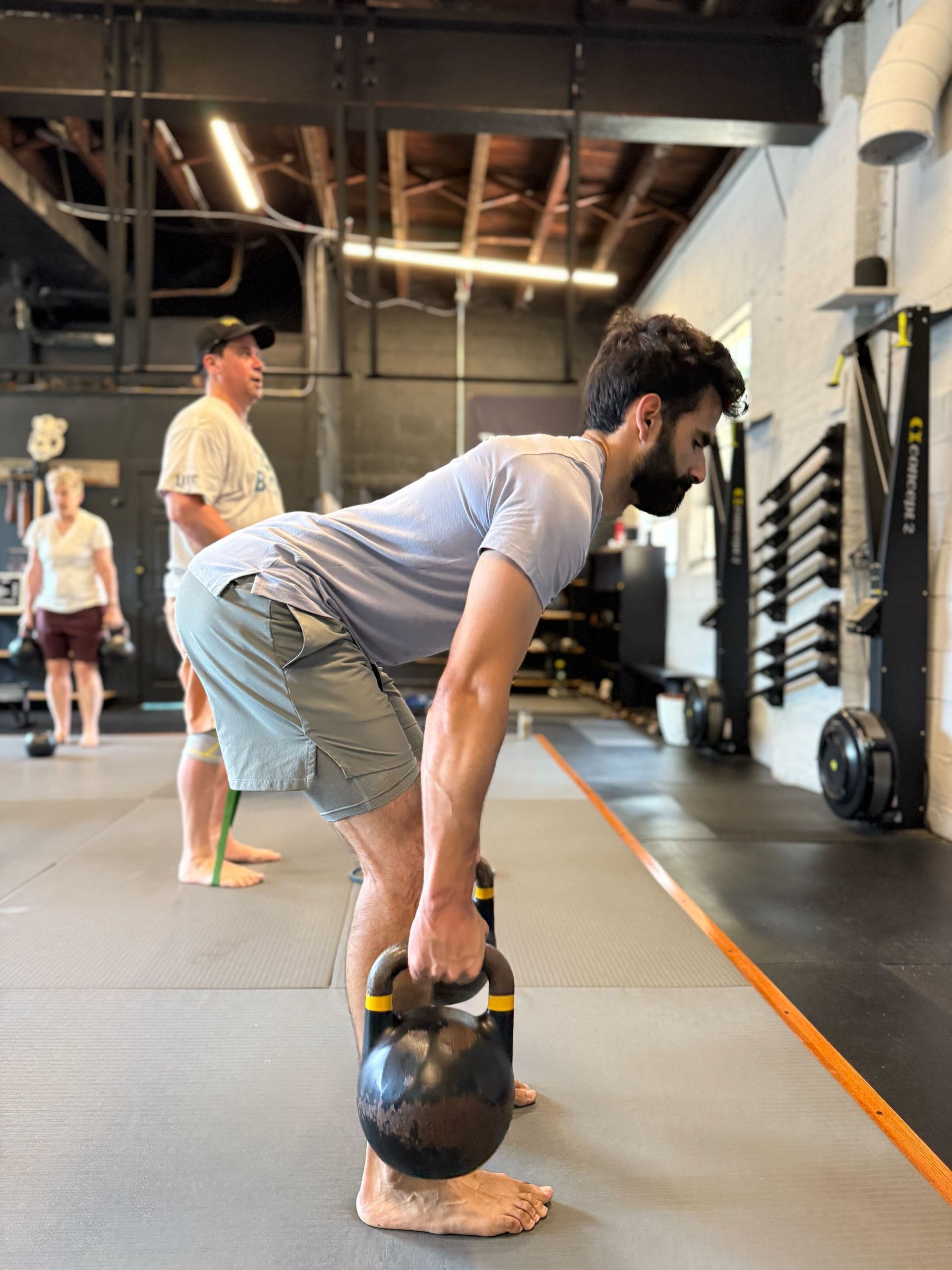
• Strength and skill: You practice foundational patterns like squats, hinges, carries, presses, and rotations with cues for alignment and control.
• Conditioning with purpose: We build heart and lung capacity using intervals or circuits that keep form and pacing in view.
• Recovery and downshift: We finish with mobility, breathing, and decompression so you leave steady, not spun up.
This is where mind-body Fitness Classes stand out: the class is challenging, but it is also coached, and the effort stays connected to technique.
Small-group coaching: the difference you can feel
Small-group Fitness Classes let us coach you, not just count reps out loud. That might mean adjusting stance width so your knees track better, changing a load so your spine stays stable, or scaling a movement so you learn the pattern without strain.
Individual attention matters because most people do not need “more exercises.” You need better execution, smarter progressions, and a plan that fits your current capacity. In a small group, we can teach you how to brace, how to breathe under load, and how to find strength through range of motion, not around it.
The other benefit is pace. In a crowded room, it is easy to rush. In a small group, you have permission to train with control and still work hard. That combination is where results tend to show up sooner.
Beginner-friendly does not mean watered down
A common misconception is that you need to “get in shape” before joining Fitness Classes. We build classes to be scalable, so beginners can learn fundamentals while experienced members still get challenged. You might use a lighter load, a different range of motion, or a simpler variation, but you will still train the same pattern.
If you are newer, the first few sessions are about learning your baseline: how you hinge without rounding, how you press without shrugging, how you breathe without holding your breath the whole time. That learning curve is normal. It is also kind of satisfying once it clicks.
We also keep the environment supportive and focused. You do not need to perform. You just need to show up, ask questions, and be willing to practice.
Two standout class styles: M.A.D. and Steel Mace Flow
Mind-body Fitness Classes are evolving beyond the usual categories. Along with strength and conditioning, we use tools and formats that train coordination, grip, shoulder health, and rotational control in a way that feels athletic and, yes, surprisingly fun.
Our schedule includes signature formats like:
M.A.D.
This class emphasizes structured training that builds strength, conditioning, mobility, and discipline in a way you can repeat week after week. You will work, no question, but the intent is progression, not punishment. Many members like M.A.D. because it feels like a clear training session, not a random playlist of moves.
Steel Mace Flow
Steel mace training adds a mind-body layer fast. The offset load demands core control, shoulder stability, and timing. Flow patterns teach you how to generate power smoothly, decelerate safely, and coordinate your whole body. It is one of those formats where you finish feeling worked and more open at the same time, which is not something every workout can say.
How to use the class schedule without overthinking it
Consistency beats intensity, but only if your schedule is realistic. Our class schedule includes early mornings, evenings, and weekends, so you can find a rhythm that fits your week. You might see options like Monday and Wednesday at 6a, 8:30a, and 5:30p, plus weekend classes such as a Saturday M.A.D. at 8:15a and 9:30a and a Sunday Steel Mace Flow at 8:15a.
If you are deciding how often to train, we usually recommend starting with two to three Fitness Classes per week for the first month. That gives you enough exposure to build skill and enough recovery to adapt. If you are already active, you can layer in more, but we would rather see you build a steady habit than spike and disappear.
What to expect in the first 6 weeks
Mind-body training often delivers early wins that feel subtle but meaningful. Your breathing gets smoother. Your posture feels more stable. Your joints feel less cranky after workouts. Then, as you stack weeks, strength and conditioning begin to compound.
A simple timeline that many members relate to looks like this:
1. Weeks 1 to 2: You feel a boost in energy and a clearer sense of how to pace yourself during conditioning.
2. Weeks 3 to 4: Movement patterns feel less awkward, and you start noticing stronger legs, hips, and core in daily tasks.
3. Weeks 5 to 6: Stamina and strength become more obvious, and balance and coordination improve, especially if you attend consistently.
Your results still depend on sleep, stress, and attendance, but the structure of our Fitness Classes is designed to make progress measurable and repeatable.
Membership, drop-ins, and trying a class
We keep the on-ramp simple. You can start with a free trial class so you can experience the coaching style and the class flow without pressure. If you prefer to drop in, we offer drop-in options, and the drop-in fees are refundable when you sign up for a membership.
This flexibility matters because it lets you start where you are. Some people want to test a morning slot before committing. Some want to come on weekends first. Either way, you can use the website to book and see what times work best.
Quick prep: what to bring and how to show up
You do not need a complicated checklist, but small details help your first class feel smoother. We suggest:
• Wear supportive training shoes and comfortable clothes you can move in.
• Bring water, and consider a small towel if you tend to sweat.
• Arrive a few minutes early so you can settle in and ask questions.
• Let us know about any injuries or limitations so we can scale intelligently.
• Expect full-body engagement, even on days that feel “lighter” at first.
The goal is for you to leave feeling trained, not drained.
Take the Next Step
If you want Fitness Classes in Maplewood NJ that train strength, conditioning, mobility, and recovery as one connected system, we built our coaching and class design for exactly that. You will learn how to move with better mechanics, breathe with more control, and build fitness that carries into your everyday life.
When you are ready, Soma MVMT is here to guide you through small-group training that stays intentional and repeatable. Use the website to choose a time, start with a free trial if you like, and let us help you turn “working out” into a steady practice you can actually keep.
Take what you learned here and apply it in real workouts by joining a fitness class at SOMA MVMT.