The fastest way to feel better and stay consistent is to stop going it alone and start moving with a room that has your back.
If you have ever started a workout routine with the best intentions and then watched it fade after a long week, you are not the only one. We see it constantly in Maplewood: busy schedules, hybrid work, family logistics, and the mental load that comes with all of it. That is exactly why Fitness Classes work so well, especially when you want results you can actually keep.
Group training is not just a vibe or a motivational trick. It is backed by research showing better stress relief, stronger adherence, and safer progress when you have coaching and a plan. In other words, the group setting helps your body change, but it also helps your routine stick, which is the part most people quietly struggle with.
In this guide, we will break down what science says about Fitness Classes, why group dynamics make such a difference, and how to use our class schedule and training approach to build a routine that fits real life in Maplewood.
Why group training works differently than solo workouts
Working out alone can be peaceful, but it can also be surprisingly easy to under-dose your effort or skip sessions without consequences. In a group environment, we design the experience so your workouts have structure and momentum. That structure matters because your body adapts to consistency, not occasional bursts of inspiration.
One of the most useful concepts here is the Kohler Effect. In simple terms, we tend to push harder when we are part of a group where our effort contributes to the overall energy of the room. That does not mean you need to be competitive. It means you naturally hold a little more pace, you finish the last interval, and you stay engaged longer than you might on your own.
This effort bump adds up. Over time, that can translate into improved cardiovascular fitness, better muscular endurance, and stronger movement quality, especially when our coaching keeps intensity aligned with good mechanics.
The stress relief is real, and the data backs it up
We talk to many Maplewood professionals who feel like stress is baked into the calendar: commute days, endless notifications, and a mind that does not quite shut off when you get home. Exercise helps, but group training appears to help more. One study found a 26% reduction in stress levels for group exercise participants compared to no significant change in those who exercised alone.
Here is what we notice in practice: when you walk into a class, your brain gets a clear boundary. For the next 45 to 60 minutes, you have one job. Breathe, move, and follow the coaching. That sounds simple, but it is powerful, because it interrupts rumination and decision fatigue.
Fitness Classes also add something that many adults are missing: regular, low-pressure social connection. Not forced small talk, just familiar faces, shared effort, and a sense that you belong somewhere beyond work and errands.
Consistency and accountability: the hidden superpower of Fitness Classes
Results come from repetition. The challenge is not knowing what to do, it is doing it when your day is messy. Group training supports consistency in a few ways that are more practical than motivational posters.
First, pre-registration creates commitment. When you pick a time on the class schedule, you have made a small promise to yourself. Second, the group becomes a gentle accountability system. People notice when you show up, and honestly, you start noticing yourself in a new way too: as someone who trains on Tuesdays and Thursdays, not someone who tries to work out sometimes.
Research on behavior change supports this. Programs done with friends have shown much higher completion rates than those done alone. The mechanism is not complicated: shared commitment reduces dropout.
Safer progress through coaching, scaling, and better movement patterns
A common concern we hear is, Are group classes safe for beginners or for people with old injuries. Our answer is yes, when the class is coached well and when the plan includes scaling options. In our Fitness Classes, our instructors cue technique, offer modifications, and keep the room organized so you are not guessing.
Guided instruction reduces injury risk because it limits the two things that usually cause problems:
- Doing too much too soon
- Repeating a movement pattern that is not serving your body
We also program sessions with progression in mind. That means we are not just chasing sweat. We are building capacity: better range of motion, stronger stabilizers, improved posture under load, and smarter pacing. When you stack weeks of that, your body starts feeling more resilient in everyday life, like carrying groceries, lifting a kid, or sitting at a desk without feeling wrecked.
What you can expect physically and mentally over the first month
People often ask what changes show up first. The truth is, the earliest wins are usually not dramatic before-and-after photos. They are quieter, and you feel them in your day.
In the first few weeks of consistent Fitness Classes, many members notice:
- Better sleep quality, even if total sleep time stays the same
- More stable energy in the afternoon instead of a crash
- Improved mood after class, with less mental clutter
- Less stiffness in hips, shoulders, and back from regular movement
- A growing sense of confidence because you are keeping promises to yourself
Then the physical markers begin to track upward: higher work capacity, improved strength, and better conditioning. The key is that the environment makes it easier to keep going long enough for those adaptations to happen.
Why community matters in Maplewood right now
Maplewood has an active, family-oriented feel, but many adults still feel isolated, especially with hybrid work. Nationally, loneliness is common, and it is not just an emotional issue, it is a health issue linked with higher risks over time. Group movement helps counter that trend with something simple and repeatable: consistent contact with familiar people, centered around a healthy habit.
We aim to make our space a place you can return to weekly, where you are greeted, guided, and challenged appropriately. The goal is not to turn fitness into your whole personality. The goal is to make it a steady pillar so everything else in life feels more manageable.
How we design Fitness Classes so you get results without burning out
Not all group workouts are programmed the same way. We structure our classes so intensity supports progress rather than punishing you. That means we balance strength, conditioning, mobility, and recovery so you can train week after week.
A good class should do three things:
1. Give you a clear focus for the day, like lower-body strength, Pilates-based control, or conditioning
2. Offer options so different fitness levels can train together safely
3. Leave you feeling worked, not wrecked
We also pay attention to pacing. Many people come in thinking harder is always better, but the real skill is applying the right effort at the right time. That is where coaching matters.
Pilates and low-impact training: the trend that is actually useful
Search interest in Pilates has surged over the last several years, and we understand why. It builds core control, posture, and joint-friendly strength. It is also a strong entry point if you are returning to exercise, managing aches, or simply wanting training that supports longevity.
Low-impact does not mean low effort. It means we reduce unnecessary joint stress while still challenging your muscles and coordination. For many Maplewood adults juggling work, commuting, and family life, that approach is sustainable. It is the kind of training you can stick with, and sticking with it is where the results live.
If you are exploring Fitness Classes in Maplewood NJ specifically to feel better in your body, not just chase numbers, Pilates and other low-impact formats can be a smart cornerstone.
Using the class schedule to make training automatic
The easiest way to stay consistent is to reduce decisions. We encourage you to treat the class schedule like an appointment you keep, not a task you squeeze in only when everything else is done.
Here is a simple way to set yourself up for success:
1. Choose two recurring days you can protect most weeks
2. Pre-register so the time feels real and reserved
3. Arrive a few minutes early so your nervous system is not rushing
4. Ask us for a scaling option if anything feels off that day
5. Track attendance for four weeks before judging results
This approach sounds almost boring, but it works. Consistency beats intensity spikes.
Cost value: why group training often beats going it alone
Many people think of personal training as the only coached option, but group classes can provide a strong coaching-to-cost ratio. You get professional programming, instructor feedback, and a motivating environment at a price that is typically more approachable than one-on-one sessions.
More importantly, the real value is adherence. A cheaper plan you do not use is not actually cheaper. Fitness Classes tend to increase follow-through, which improves your return on time and money. When you show up regularly, your body changes, and your stress profile often changes too.
Frequently asked questions about group Fitness Classes
Do group classes really reduce stress more than solo workouts
Research suggests yes, including evidence of a 26% stress reduction in group exercise participants. The combination of movement, structure, and connection appears to amplify the effect.
Are classes beginner-friendly
Yes. We coach technique, provide modifications, and help you scale intensity so you can build confidence and capacity safely.
What if I am injury-prone or coming back after time off
We can adjust movements, load, and range of motion. The goal is progress without flare-ups, and the group setting can be safe when coaching is clear.
How often should I come each week
Most people do well starting with two to three classes per week. That frequency supports habit formation and steady adaptation without overwhelming your schedule.
Take the Next Step
If you want Fitness Classes that are grounded in real science and built for real schedules, we have designed everything at Soma MVMT to make consistency feel doable in Maplewood. You get coaching, progression, and the kind of group energy that helps you work harder without feeling like you have to manufacture motivation.
When you are ready, we will help you choose the right starting point, use the class schedule to lock in a routine, and build the kind of training habit that reduces stress and improves strength over time at Soma MVMT.
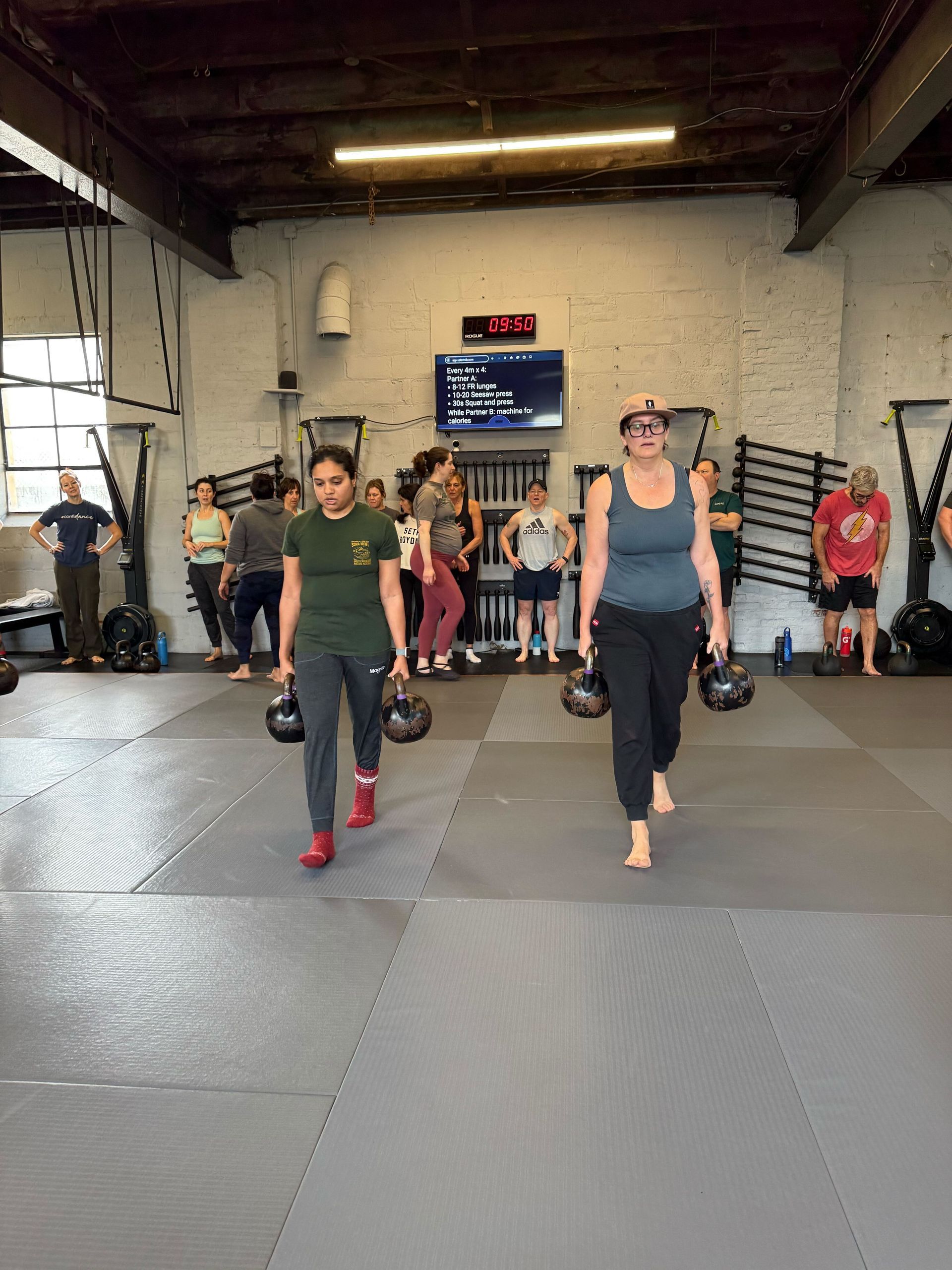
Discover the benefits of small-group training by joining a fitness class at SOMA MVMT.