This is a subtitle for your new post
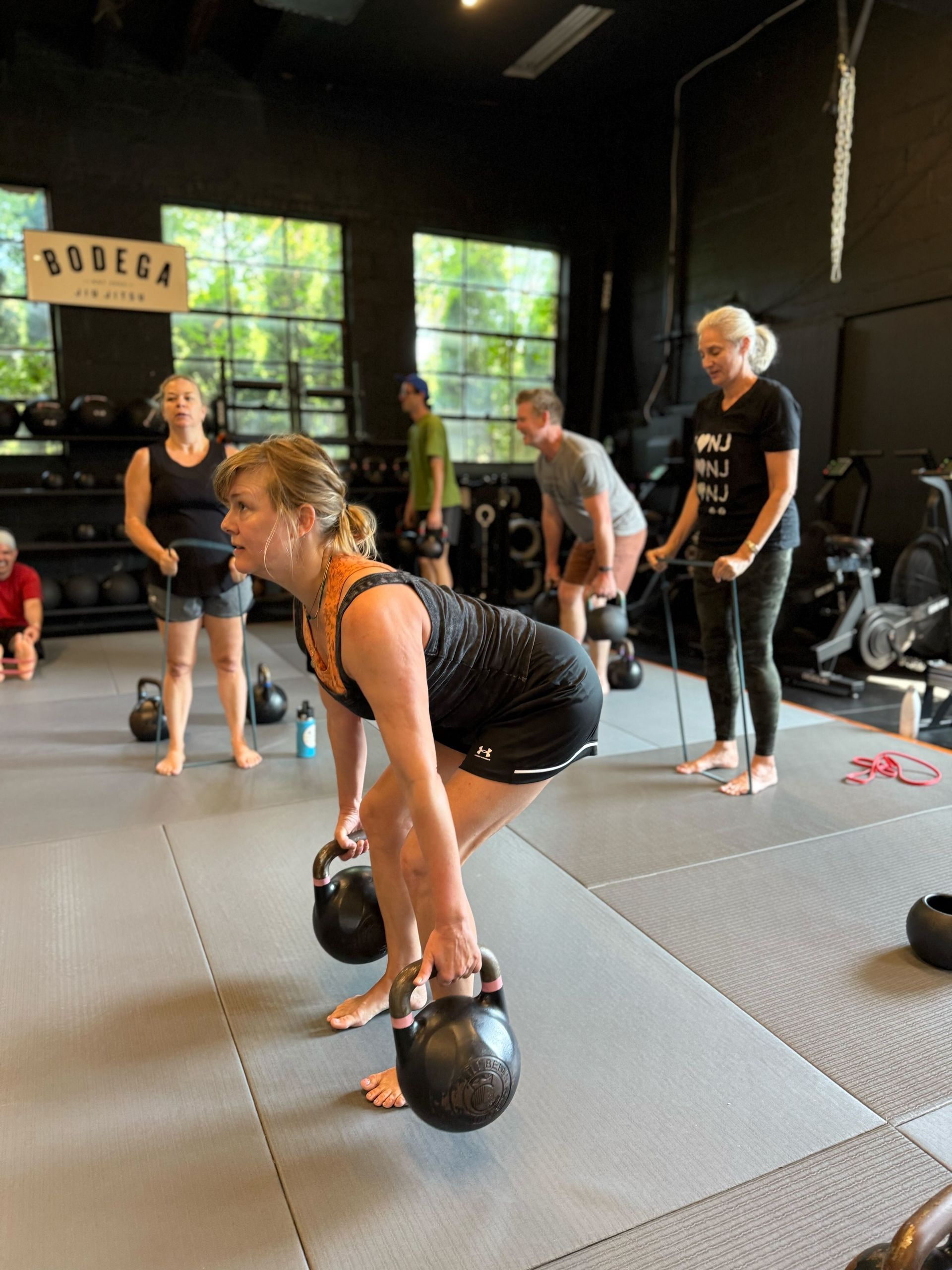
Progress feels different when you learn one new move at a time, then stack those wins into real strength.
If you have ever bounced between routines and wondered why your body is not “getting” certain movements, you are not alone. Most people do not need more random workouts. You need a plan for skill-building, plus coaching that helps you understand what you are doing and why. That is exactly where Fitness Classes can become the missing piece.
In Maplewood, schedules get packed fast, and workouts often have to fit into real life: work, commuting, family, and the general mental load of the week. Our Fitness Classes are built to make progress practical: small groups, clear structure, and coaching that meets you at your current level while still nudging you forward.
When we talk about “mastering new moves,” we do not mean chasing flashy exercises for social media. We mean learning movement patterns you can own, repeat, and improve, from the basics of bracing and breathing to more athletic elements like carries, unilateral strength, and martial arts inspired conditioning.
Why mastering new moves matters more than doing more workouts
Repeating the same comfortable exercises can feel productive, but comfort is not always the same as progress. New movement skills challenge coordination, balance, strength, and focus at once. That combination is what makes you more capable, not just more tired.
Mastery also keeps you consistent. When your training includes learning, your brain stays engaged. You start noticing small wins: a deeper squat without your heels lifting, a steadier lunge, a smoother transition from the floor to standing. Those changes are not just “nice,” they are the building blocks of resilience and longevity.
And yes, there is a psychological piece here, too. Learning new skills in a supportive room can lower stress and improve mood. You leave class feeling more organized in your body, which can be surprisingly calming.
What our Fitness Classes look like (and why the structure works)
Our sessions run 60 minutes, and each part has a job. We blend functional strength training, interval workouts (HIIT-style), mobility, conditioning, and elements of martial arts in a way that feels cohesive rather than chaotic.
A typical class flow looks like this:
Warm-up that actually prepares you
We use warm-ups to open up stiff areas, wake up your core, and rehearse patterns you will use later. If you sit a lot during the day, you will recognize the focus right away: hips, thoracic spine, ankles, and breathing mechanics.
Skill work: the “new move” focus
This is where we slow things down. You might practice a hinge pattern, a carry variation, a rotational control drill, or footwork tied to martial arts inspired movement. We coach the details: where your ribs should be, how you are stacking your joints, and how to breathe so you stay powerful instead of tense.
Strength and conditioning in a hybrid format
Maplewood trends are leaning hard into hybrid training for a reason: it is efficient. We combine short effort bursts, strength sets, and recovery so you can build muscle and conditioning in the same hour. This works especially well when your week is busy and you want training that counts.
Cool-down and reset
We finish with mobility and breathwork to help downshift your nervous system. It is not fancy, but it is effective, and it helps you leave feeling better than when you walked in.
The coaching difference: how you improve faster in small groups
Small-group coaching is not about being “watched.” It is about getting the cue you needed five minutes ago so you do not spend months reinforcing a workaround.
In our Fitness Classes, we pay attention to:
• Your mechanics: how you squat, hinge, press, pull, rotate, and carry
• Your breathing: when to brace, when to exhale, and how to stop holding your breath
• Your options: how to scale a movement without making it meaningless
• Your progression: when to add load, complexity, or intensity (and when not to)
This is also how we keep training inclusive. Beginners and experienced adults can train in the same room because the movement “theme” is shared, while the loading and variation are individualized.
Movement trends we use on purpose: stability, balance, and real-life athleticism
A lot of adults feel “strong” on machines but uncertain when the task is real life: carrying groceries, picking up a kid, walking on uneven ground, moving quickly without feeling clumsy. Our programming leans into stability and balance training because it transfers.
Unilateral training for symmetry and confidence
Single-leg or single-arm work exposes side-to-side differences and helps clean them up. That might look like split squats, step-ups, single-arm presses, or offset carries. You do not have to max out. You have to control the movement.
Carries and anti-rotation core work
Carrying weight while staying upright builds grip, posture, and core strength that shows up everywhere. Anti-rotation drills train your trunk to resist twisting when life pulls you off-center. This is the kind of “quiet strength” people notice when they suddenly feel sturdier walking up stairs or lifting from awkward positions.
Floor-to-standing transitions
Getting down to the floor and back up sounds simple until it is not. We practice it because it improves mobility, coordination, and confidence. It is also a sneaky conditioning tool.
A practical progression: how “new moves” turn into lasting results
Learning a move is not the same as owning it. We use progressions so the skill becomes repeatable under light fatigue, then under more challenge, without losing form.
Here is how that typically unfolds in our Fitness Classes:
1. Pattern first: we teach the shape and the intent, often unloaded or lightly loaded
2. Control next: we add tempo, pauses, or range to make the movement stable
3. Load and repeat: we increase resistance while keeping your mechanics clean
4. Combine and condition: we blend the move into intervals so you can keep quality while breathing hard
5. Progress with purpose: we advance variation only when the basics stay solid
This is where people often notice the “four-week change.” Not always in dramatic before-and-after photos, but in capability: better balance, less stiffness, smoother mechanics, more energy, fewer nagging aches.
Martial arts elements: athletic conditioning with an edge of skill
We include elements of martial arts because it adds coordination, timing, and a different kind of conditioning. You are not just grinding through reps. You are learning how to move with intent.
For many adults, that brings an unexpected benefit: confidence. Not performative confidence, just the quiet sense that your body listens to you more reliably. Footwork improves. Reaction time sharpens. You start feeling less fragile, which is a big deal.
And if you are someone who gets bored easily, martial arts inspired segments can be the thing that makes you look forward to showing up.
What to expect in your first class
First classes should feel welcoming and clear, not overwhelming. Plan to arrive a little early so we can get you oriented, answer questions, and point you in the right direction.
Expect a 60-minute session that blends strength, cardio, and mobility. We will offer modifications and coach your form. Your job is not to be perfect. Your job is to put in honest effort and stay open to feedback.
A few simple prep tips help a lot:
• Wear supportive shoes you can move and stabilize in
• Bring water, and consider eating lightly 1 to 2 hours beforehand
• Let us know about injuries or limitations so we can adjust intelligently
We also offer a free trial class, which is a low-pressure way to experience the format before you commit.
Staying consistent in Maplewood: how we make progress fit your schedule
Consistency is where results come from, but consistency is also where most plans break. Our approach is built around efficiency and repeatability. Hybrid class formats help you get a lot done in one hour without needing to string together multiple long sessions every week.
We also focus on removing friction. When the class is coached, programmed, and structured, you do not have to “figure it out” after a long day. You show up, we guide you, and you leave knowing what you accomplished.
That structure matters for mental health, too. Training becomes a reliable anchor: movement, breath, and community in one place.
Benefits beyond the workout: discipline, resilience, and real community
People often come in for fitness, but the longer-term benefits tend to be broader.
You build discipline by practicing even when motivation dips. You build resilience by learning to recover, reset, and try again when something feels hard. You build confidence by stacking small technical wins, not by chasing exhaustion.
And community is real here, in a simple way. Small groups create accountability without pressure. You start recognizing familiar faces, trading quick hellos, and feeling like you belong in the room. That social thread can be the difference between “I should work out” and “I will actually go.”
Take the Next Step
If you want Fitness Classes in Maplewood NJ that focus on mastering new moves, not just burning calories, we built our coaching and programming for exactly that. Our method blends strength, conditioning, mobility, and martial arts elements so you can move better, feel stronger, and keep progressing week after week.
At Soma MVMT, you will find a small-group environment where details matter, effort is supported, and your starting point is respected. If you are ready to learn skills you can actually keep, we would love to have you in for a first session.
Improve your performance and consistency by joining a fitness program at SOMA MVMT.