

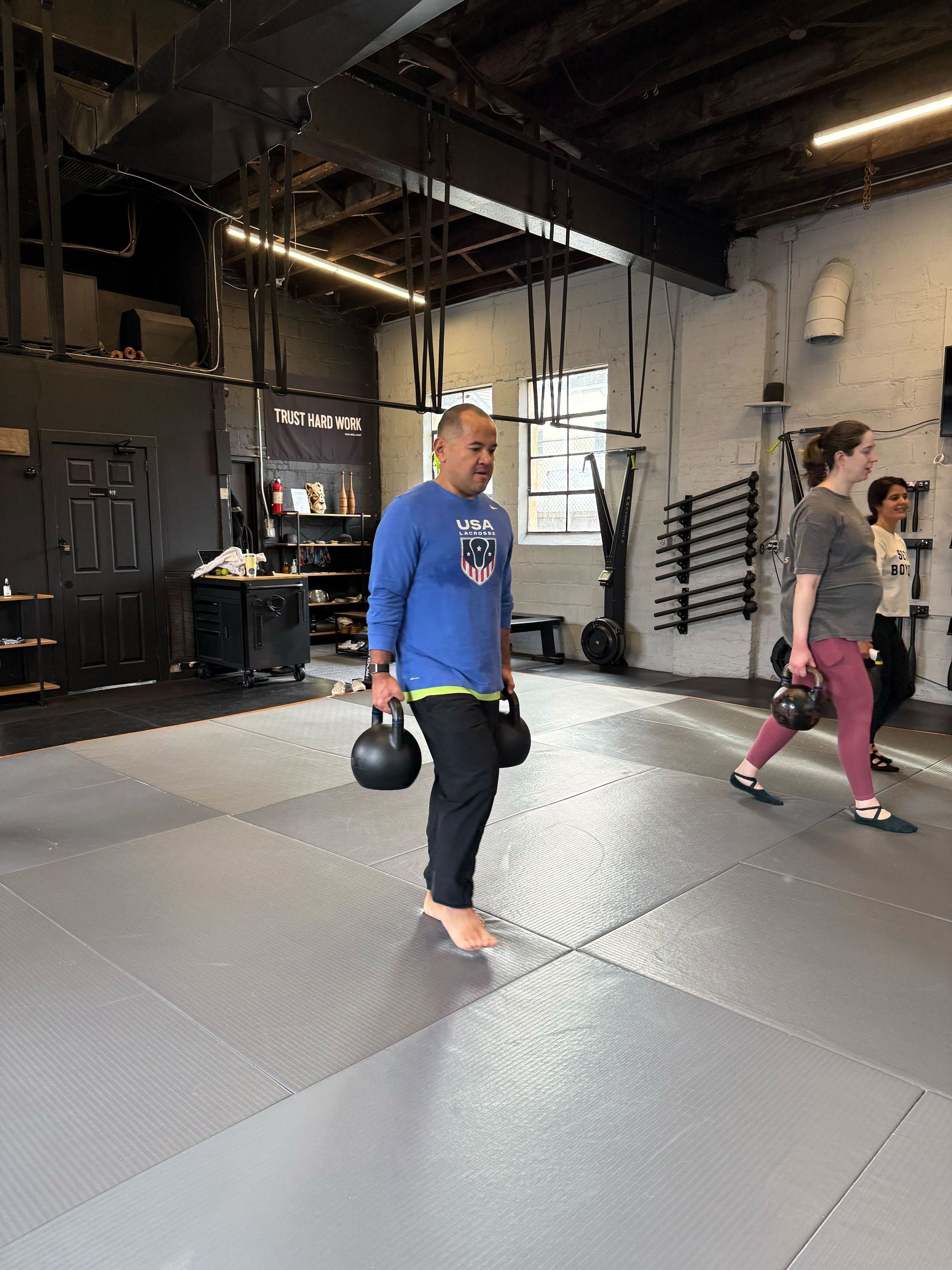
When you move in sync with other people, your brain often feels the difference before your muscles do.
Busy calendars, long commutes, and the constant hum of notifications can make stress feel like the default setting. In Maplewood, that pressure shows up in a very specific way: you can be surrounded by people and still feel oddly isolated. That is one reason we see so many locals searching for Fitness Classes that do more than just “burn calories.”
Group training is one of the most overlooked mental health tools we have. Research consistently shows that group workouts can reduce stress levels by about 26 percent compared to exercising alone, with social support accounting for roughly 25 percent of the mental health gains. That combination matters when you want your workout to help your mood, your focus, and your day-to-day resilience, not just your endurance.
In this guide, we will break down why Fitness Classes can feel surprisingly powerful for mental health, how the group dynamic changes your brain chemistry, and what to look for in a class schedule if your real goal is to feel better in your head as well as your body.
Why group workouts can calm your nervous system faster than solo training
Stress is not only “in your mind.” It is in your breathing pattern, your sleep, your posture, your digestion, and your patience. When you train by yourself, you can absolutely improve all of those, but the mental load of self-motivation stays on you. In a group, that load gets shared. You walk in, the structure is already there, and your nervous system gets a clear signal: you are safe, guided, and supported.
That structure is part of why studies show lower stress responses in group exercise participants. When you know what the next 45 minutes looks like, your brain stops scanning for the next thing to solve. Your attention narrows, your breathing steadies, and your body shifts away from fight-or-flight.
There is also a practical Maplewood factor: many of us spend our days making decisions for work, kids, family, or all of the above. Coming to a guided class removes decision fatigue. You show up, follow the plan, and leave with that rare feeling of having completed something cleanly.
The hidden mental health “stack” inside Fitness Classes
A well-run group session tends to stack several benefits at once, which is why it can feel different from doing the same moves alone. In our Fitness Classes, we aim to create a format where multiple levers get pulled in the same hour:
• Predictable structure that lowers decision fatigue and reduces stress response
• Coaching cues that keep you present instead of stuck in rumination
• Music and pacing that increase perceived energy even on low-motivation days
• Shared effort that boosts adherence when your mood would normally talk you out of it
• A clear start and finish that gives your brain a sense of completion
That last point sounds small, but it is not. A finished workout is a closed loop, and closed loops are soothing when life feels messy.
The brain chemistry behind the “lighter mood” feeling after class
The mental shift you feel after a good class is not imaginary or just “pride.” Aerobic and mixed-modality training can increase serotonin activity and support BDNF, a protein associated with brain plasticity. In plain terms, your brain becomes more capable of adapting, learning, and recovering from stress.
That matters for Maplewood residents navigating modern stressors: hybrid work, long screen hours, and the emotional weight of always being reachable. Movement that improves neurochemistry tends to improve emotional regulation too, meaning you may notice fewer mood spikes, less irritability, and a shorter “recovery time” after a stressful moment.
Group formats add another boost: people usually work harder in a class than they do alone. Not because of pressure or judgment, but because energy is contagious. That extra intensity can increase endorphin release, which is one reason you might leave feeling calmer, even if the workout was challenging.
Why intensity feels easier in a group
There is a difference between pushing yourself and punishing yourself. In group training, the best results come when the intensity is scalable. When we build intervals, circuits, or dance-inspired blocks, we coach options so you can increase effort without feeling overwhelmed. The group rhythm keeps you moving, and the coaching keeps you safe.
Over time, your brain learns a new association: challenge does not equal danger. That is a meaningful mental health skill, and it carries into life outside the studio.
Social support is not just nice, it is a measurable mental health advantage
One of the most consistent findings in research is that the social piece is not a side benefit. Social support can account for around 25 percent of the mental health improvements linked to group exercise. That could look like accountability, friendly recognition, or simply being around others who are also choosing to take care of themselves.
In Maplewood, that is especially relevant. Suburban life can be community-rich, but also schedule-heavy. You might see neighbors at pickup or on the train, yet still feel like you do not have a steady “third place” to decompress. Group Fitness Classes can become that third place, without requiring you to be “on” socially.
A class gives you low-pressure connection: familiar faces, a shared goal, and a routine that repeats weekly. Those repetitions are where bonds form naturally. It is not forced. It is just proximity plus shared effort, which is basically how humans have connected forever.
Anxiety, depression, and the case for structured group programs
If you are dealing with anxiety or low mood, the hardest part is often starting. The second hardest part is staying consistent long enough to feel a real change. Structured group programs help with both.
Meta-analyses of team sports and group interventions show meaningful reductions in depression risk, often around the high 20s percentage-wise, and structured settings can reduce social anxiety and isolation by roughly a third. Other structured formats, including circuit training and dance-based programs, show reductions in depression and anxiety symptoms in the 22 to 30 range when followed consistently.
What makes group training especially useful is that it gently limits overthinking. You do not have to design the workout. You do not have to wonder if you are doing enough. You follow the plan, adjust to your level, and let the consistency do its job.
How long until you feel mood benefits?
Many people notice a “same day” lift after a class, especially if the session includes aerobic intervals. For deeper improvements in motivation, anxiety, and depressive symptoms, research often points to six or more weeks of consistent participation as a meaningful turning point.
That timeline is helpful because it keeps expectations realistic. You do not need a perfect week. You need a steady pattern.
In-person vs online group classes: what works for real life in Maplewood
Some weeks, your schedule cooperates. Other weeks, it does not. That is normal. The good news is that synchronous online group workouts can deliver mental and cardiovascular benefits comparable to in-person sessions, with a large majority of participants reporting improvements in both areas.
We like having both options available because it helps you protect consistency. If weather, work, or family logistics make it hard to get out the door, a live online session can still give you structure, coaching, and the feeling that you showed up for yourself.
The mental health advantage is not tied to one room. It is tied to shared time, shared effort, and the fact that someone else is guiding the session while you focus on moving.
Choosing the right class schedule for mental health, not just fitness goals
Not every workout style supports every nervous system. If your primary goal is feeling mentally better, we recommend choosing formats that match your current bandwidth. High intensity can be wonderful, but only if you can recover well. Sometimes the “best” workout is the one that leaves you steady afterward.
Here is a simple way to think about it: pick classes that help you leave with more capacity than you arrived with. That can include strength circuits, rhythmic conditioning, dance-inspired sessions, or mobility-focused work, depending on the day.
A simple weekly plan that supports mood and consistency
If you are not sure where to start, we usually suggest a light structure for the first month so your brain learns the habit without feeling boxed in:
1. Start with two Fitness Classes per week at times you can realistically keep
2. Add one lighter session or mobility-focused class to support recovery and sleep
3. After two to three weeks, increase to three weekly classes if your energy is stable
4. Track mood and sleep for a month, not just weight or performance
5. Adjust intensity up or down based on how you feel the next day
That approach works because it is responsive. Mental health progress is rarely linear, and your training plan should not punish you for being human.
Beginner friendly does not mean easy, it means supported
A common worry we hear is, “What if I am new and everyone else knows what they are doing?” In a good group environment, beginners are not an inconvenience. Beginners are the whole point of coaching.
We build our Fitness Classes so you can scale up or down without feeling singled out. That includes offering modifications, clear demonstrations, and pacing that makes sense. No one needs to earn the right to be in the room. You start where you are and you build from there.
If you are returning after time off, navigating stress, or simply feeling out of rhythm, we focus on consistency first. The physical improvements come, but the early win is psychological: you prove to yourself that you can show up.
A quick comparison: group training vs solo workouts for mental wellbeing
Below is a simplified snapshot of why Fitness Classes can feel more mentally supportive than exercising alone, based on current research and what we see in day-to-day coaching.
The big takeaway is not that solo exercise is “bad.” It is that group formats reliably remove friction, and friction is often the enemy of mental health habits.
Take the Next Step with Soma MVMT
If you want a workout routine that supports your mind as much as your body, group training is one of the most practical places to start. At Soma MVMT, we design our Fitness Classes to be structured, inclusive, and genuinely energizing, so you can leave feeling clearer and more grounded, not drained.
When you are ready, use the website to check the class schedule, choose a format that fits your current life, and give yourself a few weeks of consistency. The mental benefits tend to build quietly, and then one day you notice you are handling stress differently. That is the point.
Support long-term health and performance by joining a free fitness classes trial at SOMA MVMT.