Mobility is not about being bendy, it is about moving well in real life.
If your hips feel tight on the stairs, your shoulders complain when you reach overhead, or your back gets cranky after a long day, you are not alone. Around Maplewood, we see the same pattern again and again: people are active, busy, and motivated, but daily movement starts to feel smaller over time. That is exactly where Fitness Classes can make a measurable difference, because mobility is a skill you can rebuild with the right plan.
We also want to clear up a common myth: mobility is not just stretching. Real mobility blends joint range of motion, control, balance, and strength, so your body feels capable instead of fragile. In our Fitness Classes, we coach that combination on purpose, not as an afterthought, using a structure that helps you move better week after week.
What mobility actually means, and why it changes as you age
Mobility is your ability to access a range of motion and control it. Flexibility is part of it, but flexibility alone does not guarantee stability or strength at the end range. For example, you might be able to pull your knee to your chest, but still struggle to squat without your heels lifting or your knees caving in. That is a mobility and control issue, not a willpower issue.
As we get older, we often lose mobility for predictable reasons: we sit more, we repeat the same patterns, and we stop using certain ranges. Your nervous system also gets cautious if it senses weakness or instability, and it will limit your motion to keep you safe. The good news is that the body responds quickly when we reintroduce smart movement progressions, especially in a consistent class setting.
Why Fitness Classes work better than random stretching
A few minutes of stretching can feel good, but it rarely changes how you move when you are carrying groceries, getting up off the floor, or jogging across a parking lot. Fitness Classes help because we build mobility into a broader system: preparation, strength, and conditioning, all tied to real movement patterns.
In practice, that means we do not just open up a joint and hope it sticks. We open it up, then we load it, then we repeat it under control. That sequence is what teaches your body that the range is usable and safe. Over time, many people notice meaningful improvements in how they walk, squat, reach, rotate, and balance, often within a few weeks of consistent training.
The class structure that drives mobility gains
When you attend Fitness Classes in Maplewood NJ, what happens inside the hour matters. Our classes are designed around a simple idea: you should leave feeling more athletic than when you arrived, not beaten up. So we follow a structure that supports mobility from the first minute to the last.
Joint mobility warm ups that prepare, not exhaust
We start by taking inventory. Ankles, hips, thoracic spine, shoulders, and wrists usually top the list because those joints influence almost everything you do. We use controlled circles, dynamic stretches, and active ranges that wake up the nervous system.
This warm up is not filler. It is where we begin restoring access to positions you may have lost, and where we reduce the chance of your body compensating later in the workout. Most people feel a noticeable difference between the first few minutes and the moment we transition into strength work.
Functional strength with compound movements
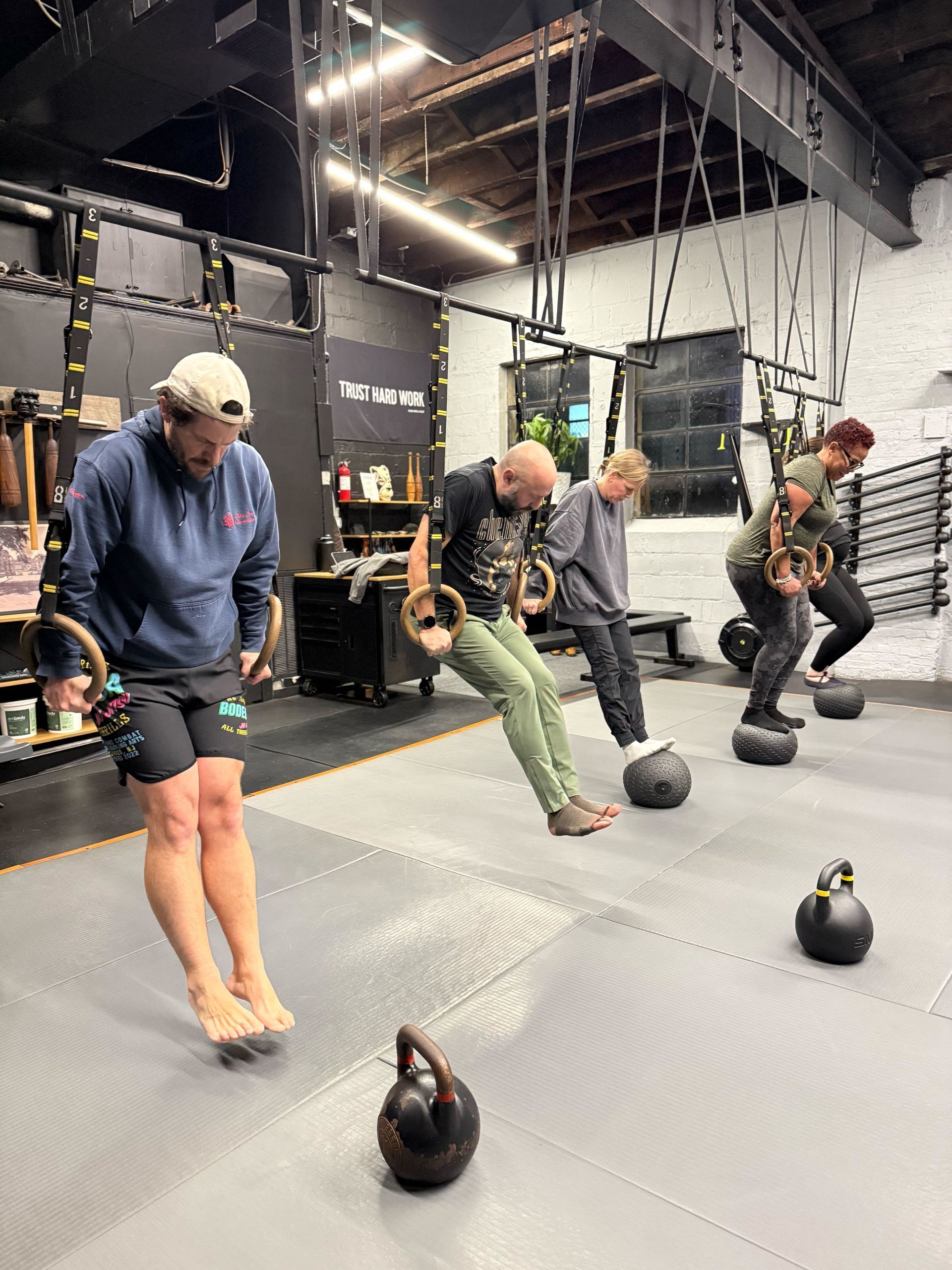
Mobility improves fastest when strength supports it. That is why we focus on compound lifts and real world patterns: squats, hinges like deadlifts, pushes, pulls, carries, and rotations. We use tools like kettlebells, dumbbells, barbells, and bodyweight, depending on your level and the goal of the day.
Here is the part that surprises people: getting stronger can make you feel looser. A well coached squat pattern can restore hip and ankle range. A properly trained row can improve shoulder mechanics. A loaded carry can build trunk stability that makes your spine feel better. Strength is not the enemy of mobility when it is taught correctly.
Conditioning that keeps movement quality intact
We like training that challenges your engine while keeping technique honest. Intervals are useful here, because they let you work hard in short bouts and reset form between rounds. Conditioning also supports mobility indirectly by improving circulation, recovery, and confidence under fatigue.
We coach pacing and breathing because tension often shows up as stiffness. When you learn to breathe and brace, your movement gets smoother, and you stop fighting your own body.
Cool downs that reinforce balance and flexibility
We finish with a downshift: slower mobility work, balance drills, and targeted stretching where it actually helps. This is where we lock in the lesson from class and send you back into your day feeling more open.
The cool down is also where we teach simple take home ideas. Nothing complicated, just practical reminders you can use when you are sitting at a desk, driving, or winding down at night.
What you can expect to feel, and when
Most people notice quick wins first: better posture, easier stair climbing, less stiffness in the morning. Those changes can happen in the first two to four weeks if you show up consistently and we keep your progressions appropriate.
Bigger shifts take longer, like deeper squats, stronger overhead positions, or better single leg balance. We generally see those improvements build over eight to twelve weeks, especially when you stick with a routine and let us progress the plan without rushing. Mobility is a long game, but it is not a mystery. Consistency plus smart loading equals results.
The mobility problems we see most often, and how we address them
In Maplewood, we work with people who are active in different ways: runners, parents, desk workers, weekend athletes, and folks returning to training after time off. Different lives, similar movement patterns.
Tight hips and limited squat depth
This is usually a combination of hip rotation limits, ankle stiffness, and trunk control. We will use split squat variations, deep goblet squat holds with control, and hip rotation drills that teach your body how to own the position. We also coach foot pressure and knee tracking, because small tweaks matter.
Shoulder stiffness and cranky overhead reaching
Shoulders often feel stiff when the upper back does not rotate or extend well, or when the scapula is not moving smoothly. We use pulling volume, serratus and scap control drills, and pressing progressions that match your current range. The goal is not forcing your arm overhead. The goal is earning that position with stability.
Low back tightness that returns after sitting
Back tightness often improves when hips move better and the trunk gets stronger. We teach bracing, hinge mechanics, and core work that supports your spine from the inside out. We also use carries, anti rotation work, and glute strength to reduce the need for your lower back to do everything.
Balance and stability that feel off
Balance is trainable, and it is a huge part of mobility. We use single leg strength, tempo work, controlled step downs, and coordination drills that help you trust your body again. For many people, that confidence is the difference between avoiding movement and enjoying it.
Why small group coaching changes the experience
In a room full of people, you can still get personal coaching if the class is intentionally designed that way. We keep our groups small enough to watch movement, adjust technique, and progress you safely. That matters for mobility because small errors add up over time, and good coaching can save you months of frustration.
Small group also makes it easier to scale the workout. If you are brand new, we keep the pattern simple and stable. If you are experienced, we can increase complexity, load, or range of motion without guessing. Everyone trains together, but your version fits your body.
What you will practice in our mobility focused Fitness Classes
To make this practical, here are the buckets we return to again and again. You will see these themes across the week, with different exercises and progressions depending on the class.
• Joint prep that targets ankles, hips, thoracic spine, and shoulders so you start moving better before the hard work begins
• Strength patterns including squats, hinges, pushes, and pulls that build usable range of motion you can control
• Loaded carries and core stability work that improve posture, balance, and resilience in daily movement
• Interval based conditioning that supports endurance while keeping technique and alignment in focus
• Cool down work that reinforces flexibility, breathing, and recovery so you leave class feeling better, not wrecked
How to start if you feel stiff, intimidated, or out of shape
You do not need to be flexible to join Fitness Classes. In fact, being stiff is a pretty good reason to start. Our job is to meet you where you are and coach a progression that feels challenging but safe.
If you are nervous about keeping up, we can scale range of motion, reduce load, or adjust the movement pattern. If you have old injuries, we work around them while still training the fundamentals. And if you have not exercised in a while, we focus on consistency first, because the body responds best to steady input.
Here is a simple way to think about your first month: show up, learn the patterns, and let us coach the basics. Mobility improves when the basics get repeated with quality.
Making your mobility gains stick outside of class
Classes do the heavy lifting, but your day to day habits can either reinforce progress or erase it. You do not need a complicated routine. You need a few smart anchors.
Try standing up and taking a short walk every hour if you sit a lot. Add a few controlled hip and shoulder circles in the morning. And if you can, pair your training with easy movement around town, like a brisk walk or a gentle hike. Movement variety is a quiet superpower for mobility.
Take the Next Step
If you want to feel looser, stronger, and more confident in your movement, our coaching approach is built for exactly that. At Soma MVMT, we use small group Fitness Classes to combine joint mobility, functional strength, and conditioning in a way that carries over to real life, whether you are lifting, running, parenting, or just trying to feel good in your body again.
You can start right where you are, and we will guide the progressions so your mobility improves without guesswork. If you are looking for a Soma fitness center experience that feels personal, structured, and movement first, we would love to have you join us for a class.
Improve flexibility, mobility, and overall wellness by training at Soma MVMT.