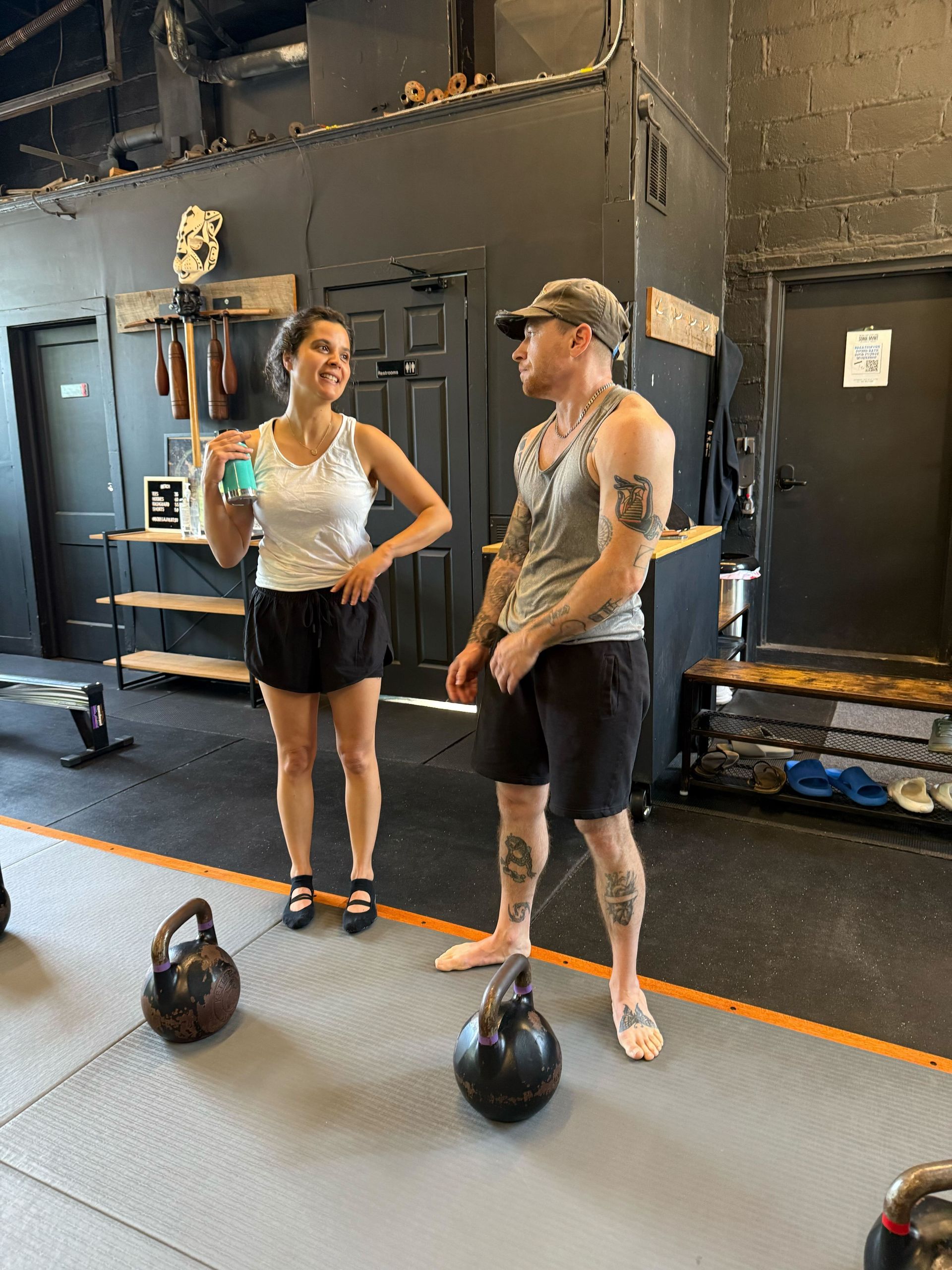
The easiest way to meet people in Maplewood is to show up to the same room, at the same time, doing something that makes you feel good.
Maplewood is friendly, but real friendships still take repetition. You can wave at people on the sidewalk a hundred times and never learn a name. Fitness Classes change that dynamic because we build in the one thing adult social life usually lacks: a shared routine.
We see it all the time. You come in for the workout, but you stay because someone notices you showed up, asks how your week went, and saves you a spot on the mat. That is not accidental. Group training naturally creates small moments of connection that add up quickly.
And the data backs up what we experience on the floor. In a UK survey, 37% of Gen Z said they use gyms to socialize, and 42% reported forming friendships while exercising. In the US, group fitness is packed with Gen Z and Millennials, which matters because these generations tend to prioritize community and shared experiences, not just results.
Why Fitness Classes make friendship feel effortless
Friendships form faster when you do three things together: show up consistently, share a little discomfort, and celebrate small wins. That is basically the blueprint of group training.
In Fitness Classes, you do not need a perfect opener or a carefully timed invitation to coffee. You just take the same class schedule slot, exchange a few words before and after, and let familiarity do the heavy lifting. Over time, “Are you using the heavier dumbbells today?” becomes “See you next week?” which turns into “Want to grab something after?”
There is also something refreshingly low pressure about it. You are not trapped at a networking event trying to perform. You are breathing, moving, and getting out of your head. That shared effort makes conversation easier and more genuine.
Shared motivation creates real bonds
Group settings amplify motivation, and motivation is social. When the room moves together, you feel pulled forward even on days you would normally bail. That matters because consistency is what makes people recognizable to you, and you to them.
Studies on group exercise show that belonging and even light competition help people stick with it. Retention can reach 73% in group fitness facilities, and gym members who attend classes even once a week are about 20% more loyal than people who only work out solo on the floor. Loyalty is not just a business metric. For you, it translates into repeated exposure to the same community, which is the soil friendships grow in.
Classes give you “built-in conversation starters”
One underrated benefit of Fitness Classes is that you never have to wonder what to talk about.
• You can ask about form without it being weird
• You can celebrate a milestone without it feeling forced
• You can laugh off a tough interval together
• You can trade tips on recovery, stretching, or gear
• You can notice progress in others and say it out loud
Those little interactions are the beginning of trust. They also make Maplewood feel smaller in a good way, like you have a place where people recognize you.
Why this works especially well in Maplewood
Maplewood has that walkable, community-driven vibe, but many of us are busy. Between commuting, family schedules, and a calendar that fills itself, it is easy to feel like you live near people, not with them.
Fitness Classes fit into Maplewood life because they are structured, time-bound, and social without demanding extra planning. You do not need to host a dinner or coordinate a big weekend plan to meet someone. You just show up for 45 to 60 minutes and let the routine handle the rest.
There is also a strong health focus across New Jersey, including interest in low-impact training and smart movement for pain management. That matters because when you feel safe and supported in a class environment, you are more likely to return, and returning is how relationships move from “friendly” to “friend.”
The social science behind group training (without getting too academic)
We do not need to overcomplicate it, but it helps to name what is happening.
1. Proximity and repetition
You tend to connect with people you see often. Fitness Classes create repeated contact without you having to schedule it.
2. Shared identity
When you take the same class, you become part of a micro-community. It is subtle, but real. You start to think, “These are my people,” even if you are all different ages, backgrounds, and fitness levels.
3. Mutual accountability
Accountability is friendship’s underrated cousin. Someone notices when you are missing. Someone asks if you are okay. And when you come back, you feel welcomed, not judged.
This is one reason coached group classes are such a staple nationally. About 21% of gym members regularly join coached group classes, and 85% of those participants attend at least twice weekly. Frequency accelerates familiarity, and familiarity accelerates friendship.
What friendships look like inside Fitness Classes
Not every friendship starts with an instant connection. Most of the time, it is smaller and quieter, which is honestly a relief.
You might start with:
• A nod during warm-up because you have seen each other before
• A quick “That finisher was brutal” on the way out
• A moment where someone offers you a modification that saves your knees
• A shared laugh because the playlist hit the exact wrong song at the exact wrong time
Then, one day, you realize you know each other’s names. You know who likes the early class, who always grabs the same station, who is coming back from an injury, who is training for a race, who is just trying to feel better in their body again.
Those details are the texture of community.
Fitness Classes help beginners feel included faster
A lot of people avoid group training because they worry they will be the “new person” who cannot keep up. We get it. But beginners often find friends faster in classes than in solo workouts, because the structure makes it clear what to do and when to do it.
In a well-coached environment, you do not have to guess your next move or feel like you are in the way. You follow the flow, take options when you need them, and learn the rhythm of the room. That rhythm is social. It creates a sense of “we’re in this together,” which is exactly what you want when you are trying to meet people.
If you are looking for a softer entry point, low-impact formats like yoga and Pilates tend to be especially welcoming. National participation trends show strong growth here, including Pilates growing 15% in 2023, which lines up with what we hear from busy professionals and parents: you want training that helps you feel better, not just more exhausted.
How to turn a class into a friendship (practical, not awkward)
You do not need to become a social butterfly. A few simple habits make a big difference, and they still feel like you.
1. Pick one or two weekly time slots and protect them
Consistency matters more than intensity. Even 1x per week is enough to build familiarity.
2. Arrive five minutes early
Those few minutes before class are prime social time, and the energy is calmer than after the workout.
3. Ask one simple question
“What class do you usually take?” or “Have you tried this format before?” is plenty.
4. Stay two minutes after
Do not rush out if you can help it. Post-class is where quick chats turn into real conversation.
5. Join small community moments
Challenges, theme days, or intro events make it easy to talk because everyone is doing the same thing.
This is also where onboarding matters. Research shows 87% of people are more likely to stay active when they get a positive start. A good first few visits are not just about learning movements. It is about feeling like you belong.
Group classes vs solo workouts: the friendship advantage
Sometimes you just want to put your headphones on and disappear into your own world. We respect that. But if your goal includes meeting people, the differences are pretty clear.
The point is not that one is “better.” It is that Fitness Classes are a shortcut to what most adults say they want: a healthy routine that comes with real human connection.
Making it work with a busy Maplewood schedule
Time is the number one barrier we hear. The good news is you do not need daily workouts to build community.
A simple approach that works well:
• Start with 1 to 2 classes per week
• Choose one class as your “anchor” at the same time each week
• Add a second class when your schedule allows, like a lunch-hour slot or a weekend morning
That “anchor class” becomes your social home base. You will recognize faces faster, and people will recognize you. And once that happens, showing up feels easier, even on chaotic weeks.
Take the Next Step with Soma MVMT
If you want Fitness Classes that build strength and real friendships in Maplewood, we designed our experience for exactly that: consistent coaching, a welcoming room, and a class schedule that makes it easy to keep coming back. At Soma MVMT, community is not a buzzword for us. It is something you can actually feel when you walk in and start moving.
When you join us, you are not just signing up for workouts. You are stepping into a routine that makes it easier to meet people, stay accountable, and feel at home in your own town, week after week.
Put what you learned here into action by joining a free fitness classes trial at SOMA MVMT.