The best workouts are getting easier to personalize, easier to measure, and easier to stick with.
Fitness Classes in Maplewood, NJ have always been about energy, community, and good coaching, but something has changed in the last few years: people want proof. We see it every day. You want to know you trained in the right zone, progressed over time, and recovered well enough to come back strong, not just sweaty.
That is why technology is showing up more and more in Fitness Classes, even in studios that still feel very human and hands-on. Smartwatches, heart-rate monitors, class scheduling apps, and simple progress benchmarks are helping members train with more intention. The goal is not to turn workouts into spreadsheets. The goal is to make your effort count.
And this is not a niche trend. Wearable technology is projected as the top fitness trend for 2026 in the ACSM worldwide survey, which is a big signal that tracking intensity and recovery is becoming a baseline expectation, not a luxury. In our space, tech is turning “I think I am improving” into “I know what is working.”
What “smart” really means in Fitness Classes
When we say smarter workouts, we are not talking about replacing coaching with gadgets. We are talking about using a few simple data points to make our coaching more precise and your training more sustainable.
In a class setting, smart training usually comes down to three things:
• Better intensity control so you do not accidentally go too hard, too often
• Clearer progress tracking so you can see change even when the mirror is slow
• More personalized modifications so your workout fits your body today
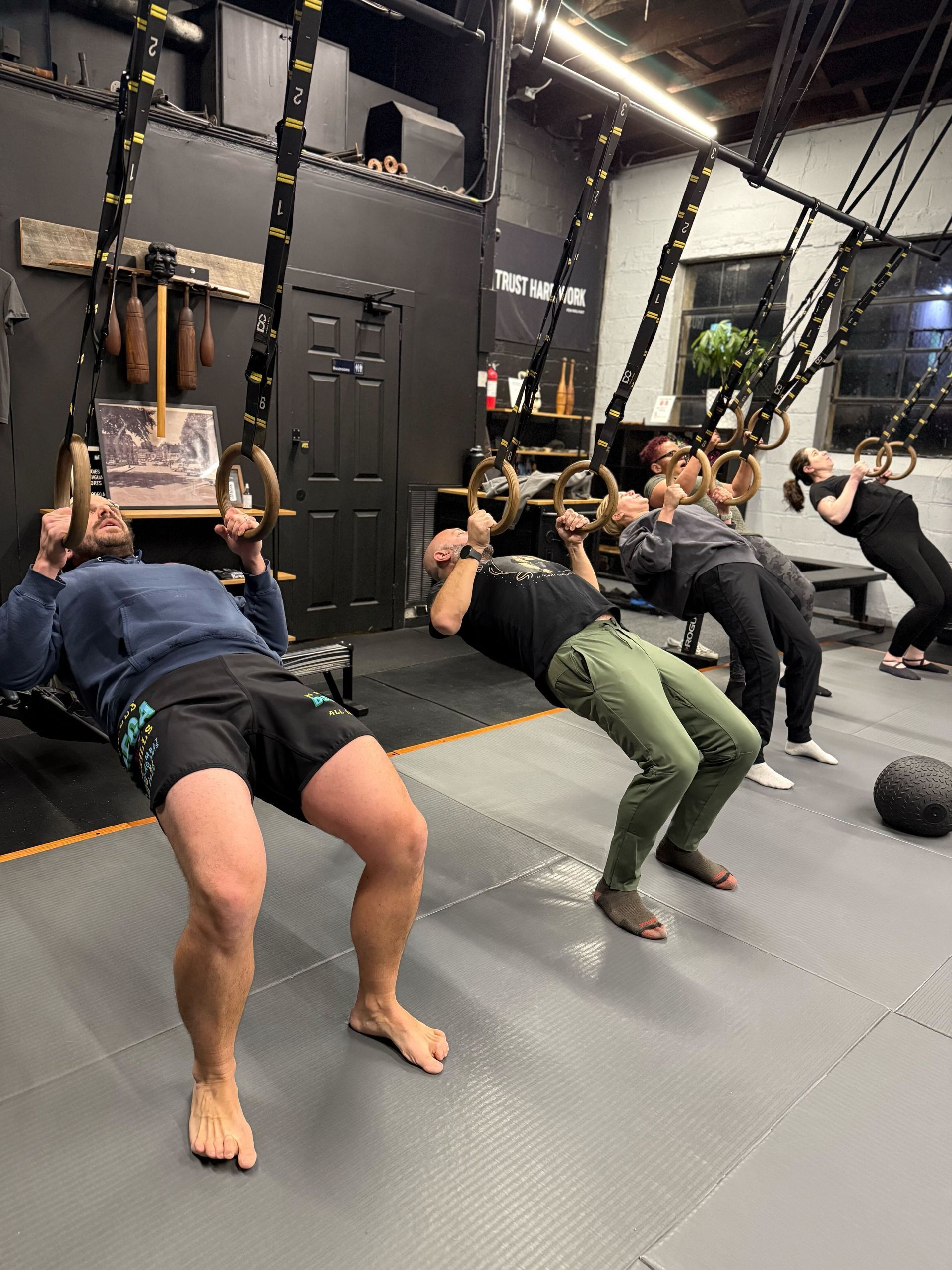
That last part matters. Maplewood is full of busy schedules, mixed fitness backgrounds, and different training ages. A room can include a beginner, a former athlete getting back into it, and an active older adult who wants strength, balance, and confidence. With smart tools, we can coach each person with more clarity while still keeping the class flowing.
Why wearables are becoming standard, not “extra”
Wearables are not perfect. Calorie numbers can be off, and different devices estimate things differently. But the real value is consistency. When you track heart rate, effort, and recovery over time, patterns show up, and patterns help us coach you better.
According to the ACSM 2026 trends forecast, wearable tech is at the top of the list, and that makes sense. Heart-rate zones, readiness scores, and recovery metrics have become common language in Fitness Classes. Even if you never look at a graph, the feedback loop can be powerful.
Here is what we like about heart-rate based coaching in particular:
• It helps you find the “working” zone where you can build fitness without burning out
• It gives you an objective way to scale effort up or down on a given day
• It makes interval training cleaner because you can see how fast you recover between rounds
And yes, you can still get a great workout without a wearable. But when you do use one, it becomes easier to train with restraint when you need it and to push with confidence when it is the right time.
Tech supports coaching, it does not replace it
A good coach sees movement quality, breathing patterns, posture changes, and the subtle stuff that a sensor cannot fully understand. Technology is best when it supports that human read.
Industry coverage has highlighted AI-driven personalization, connected fitness, and predictive analytics as growing forces in boutique fitness. But in real life, in a studio, the “AI moment” can be simple: noticing your output trends down when you have been sleeping poorly, or that your heart rate spikes early when you are stressed. Data can start a conversation that leads to smarter choices.
We use tech as a tool to answer practical questions, like:
• Are you training hard enough to create change, or just repeating comfort workouts?
• Are you recovering well enough to keep progressing week to week?
• Are your strength and conditioning sessions balanced with mobility and core work?
That balance matters because functional and recovery-focused training is climbing in popularity, too. ACSM also lists mobile exercise apps, balance training, and programs for older adults among top trends, which fits what we see locally: people want to feel capable, not crushed.
The Maplewood factor: variety, high expectations, and real life schedules
Maplewood has a strong boutique fitness culture and a real appetite for class-based training, from mind-body formats to strength and conditioning. There is also a visible demand for age-friendly wellness options in municipal programming like balance and stretch, chair yoga, and other functional classes. That tells us something important: people here want fitness that adapts.
In a community like ours, technology helps solve everyday barriers. It can help you stay consistent when work runs late, when your kid’s schedule changes, or when you are managing a comeback after time off. You can book from your phone, see your training streak, and get reminders that nudge you back into a routine without guilt.
Just as importantly, it helps you see progress in multiple ways. Maybe fat loss is your goal, but you also notice your resting heart rate trending down, your recovery improving, and your strength numbers climbing. Those are wins that keep you engaged, especially when motivation wobbles a bit.
Where tech helps most in class based training
Not every metric matters for every person, and not every class needs the same tools. The sweet spot is using the right tech in the right moment.
Heart rate and interval based training
If your class includes conditioning intervals, circuits, or mixed-modality work, heart-rate monitoring can guide pacing. You can learn what a sustainable “green zone” feels like, and what a true push looks like, without guessing.
It also helps prevent the common trap of going max effort every session. Many people do that for a few weeks, get sore, get tired, and then disappear. Smart training keeps you showing up, which is the real secret.
Strength training with simple benchmarks
You do not need fancy devices to train strength intelligently. A notes app and a clear plan can be enough. But technology can make it easier to log loads, reps, and progressions so you are not starting from scratch every week.
In our Fitness Classes, we like benchmarks that stay motivating, not intimidating. Things like:
• How many controlled push-ups you can do with great form
• Whether your squat depth and stability are improving
• How your core endurance changes over a training cycle
Those markers matter for performance, posture, and injury resilience.
Mobility, balance, and recovery tracking
Recovery is not lazy. It is strategic. When you track sleep quality, readiness, or even a simple daily stress rating, you get better at making decisions. Some days you should push. Other days you should prioritize mobility, breath, and foundational strength.
This is especially helpful for active adults and older adults, where consistency beats intensity heroics. Balance and core strength are also listed among top trends, and that is a reminder that “fit” is not just about heart rate. It is also about moving well.
What a tech enhanced class experience looks like (and what it does not)
Some people worry that tech will make classes feel cold. We get it. Nobody wants to feel like a number.
A healthy tech-enhanced experience keeps the vibe human and the data in the background until it is useful. Here is a simple comparison:
Traditional class experience
You follow the workout, you work hard, you leave feeling accomplished, and you hope it is moving you toward your goals.
Tech enhanced class experience
You follow the workout, and we can also dial in intensity, track progress over time, and adjust your plan based on how your body is responding.
The difference is not the sweat. The difference is feedback. Over weeks, that feedback can reduce plateaus and increase confidence, especially if you are new to Fitness Classes or returning after time off.
How to know if tech is helpful or just a gimmick
Tech becomes noise when it creates pressure without clarity. Helpful tech makes your next decision easier.
We recommend looking for a studio approach that keeps these priorities in place:
• Coaching comes first, and tech supports coaching cues
• Metrics are explained in plain language, not jargon
• You are not forced to buy a device to participate
• Progress is measured in multiple ways, not just calories
• Modifications are normalized, so data never becomes a shame game
When those boxes are checked, technology feels empowering. You get structure without obsession.
Practical ways to use tech between classes (without overthinking it)
Consistency is where results come from, and technology can help you stay connected to your training plan in small, realistic ways. You do not need to track everything. Pick one or two levers and keep it simple.
1. Use the class schedule to book your week in advance so life does not fill every open slot.
2. Track your workouts or notes so you remember what you lifted and how it felt.
3. Watch your weekly movement trend, not just single day intensity, to avoid the boom-bust cycle.
4. Pay attention to recovery signals like sleep and soreness so you choose the right effort level.
5. Set one goal for the month, like improved endurance or better mobility, and let your data support it.
That is the heart of smarter training. Small inputs, better decisions, steady progress.
FAQs about tech in Fitness Classes
Do I need a smartwatch or fitness tracker for class?
No. You can participate fully without one. If you do have a wearable, we can help you use it in a way that supports your goals.
Will tech make classes feel less personal?
It should not. The best use of technology makes coaching more personal because it helps us tailor cues, intensity, and modifications to what you need.
What types of classes work best with heart-rate monitoring or app tracking?
Interval-based conditioning, circuit training, and mixed strength-cardio formats benefit most from heart-rate awareness and progress logging. Mobility and recovery work can also benefit through readiness and consistency tracking.
Are smart workouts good for beginners?
Yes, often even better. Beginners tend to push too hard or not hard enough. A little feedback helps you learn what the right effort feels like.
Can tech help with weight management, mobility, or recovery?
Yes. Weight management improves with consistency and appropriate intensity. Mobility improves when you track and repeat the right drills. Recovery improves when you notice patterns and adjust before you get run down.
Are tech enabled classes useful for older adults or people returning from injury?
Absolutely, because the goal is appropriate load and steady progression. Tracking can help prevent the “too much too soon” problem and make recovery a normal part of training.
Take the Next Step
If you want workouts that feel motivating and measurable, tech can be a real advantage, as long as it stays in service of coaching and community. That is how we design Fitness Classes in Maplewood, NJ: with clear structure, real feedback, and room for your body to have good days and not-so-great days without losing momentum.
When you are ready to experience that approach in person, Soma MVMT is here to help you train smarter, build consistency, and actually understand what is working in your routine, not just hope for it.
Build better movement habits and develop your physical capabilities at Soma MVMT.